Showing posts with label Straitgate Lake. Show all posts

Monday, 16 February 2015

Fishponds


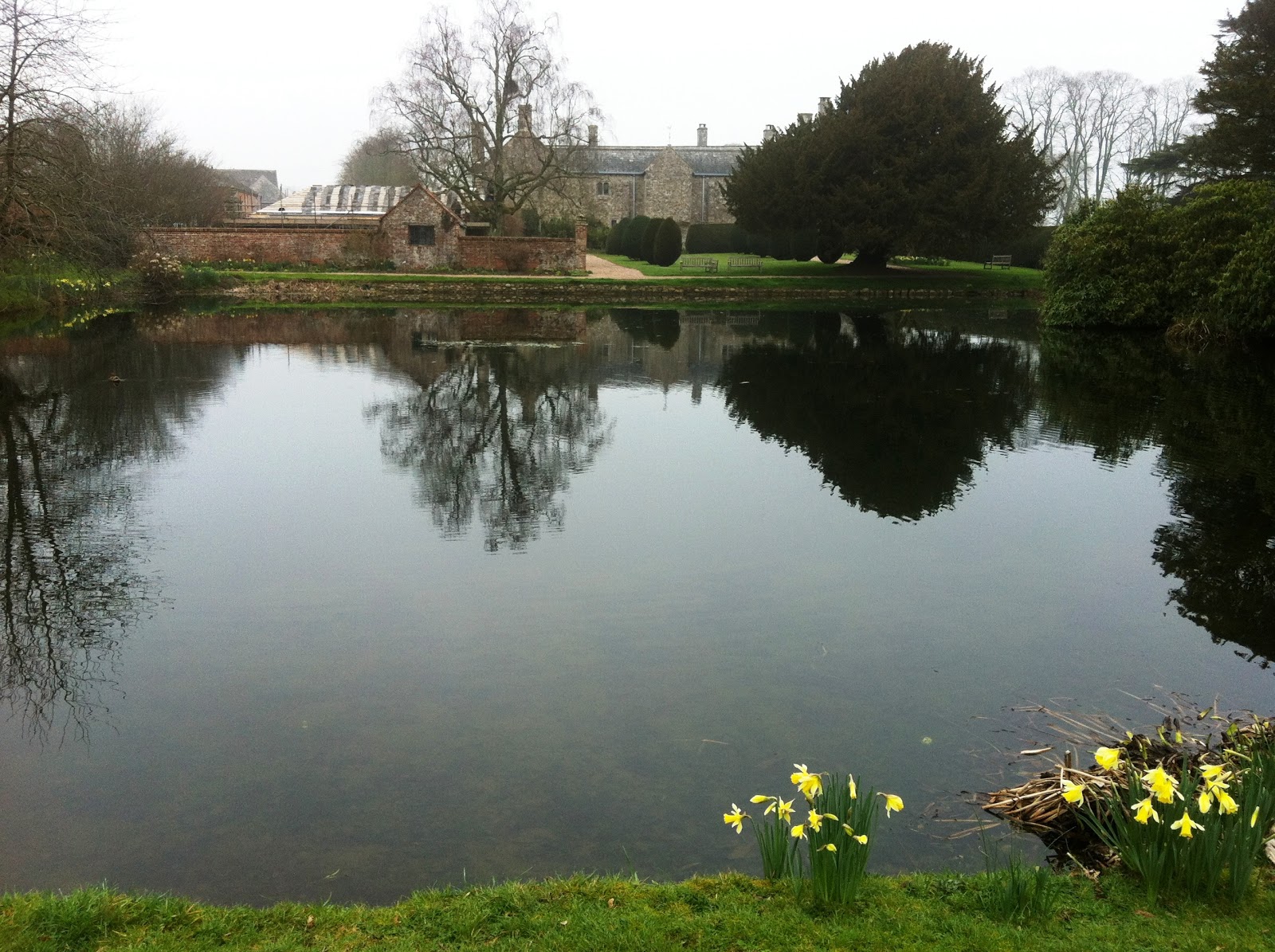
And talking of heritage assets and settings of listed buildings, this is the setting of Grade I listed Cadhay, resplendent with mediaeval fishponds in the foreground, themselves Grade II listed. What we said in our last blog would apply equally here too. A reliable supply of spring water from Straitgate, particularly during drier periods, is critical to the functioning of these ponds.


This is what was said at the Public Inquiry in 1968:
396. Cadhay is a historic house, listed as being of historic and architectual importance, and is open to the public. One of the features is the fish ponds immediately to the south of it. They are fed by the reservoir [in Cadhay Wood] and [Cadhay Wood] stream. They are not lined and water seepage takes the whole outflow. 397. It is contended that if the present water supply to the ponds were no longer sufficient to supply them they would be lost to posterity in the way in which they have existed for centuries, which would be a wanton destruction of a valuable historic monument.
The position of the spring is indicated by our arrow on ECC’s 1967 working plans below. No doubt it was in an effort to protect this water source [53] that ECC intended to leave the surrounding area unquarried.


Aggregate Industries has made no allowance yet for this spring on any plans we have seen.


Yet more for AI to subtract from its ever decreasing resource?

In 1968, the planning inspector concluded that any loss of flow to springs and streams at Cadhay "could be made good from the Straitgate lake...". [408] Without a lake, it's not exactly clear how AI could achieve that now.

Saturday, 8 February 2014

Spot the difference?

With flooding, extreme weather and climate change in the headlines again, take a look at the two quarry plans for Straitgate Farm. On the left, the one English China Clays put together in 1967 that was turned down. On the right, the one from Aggregate Industries. Spot the difference?


The most noticeable difference is a 32 acre lake on one and an ephemeral or transient pond on the other. The 1967 lake would have been formed in the void left by quarrying on the eastern side of the farm - an area no longer targeted by AI, for geological and commercial reasons. This 32 acre lake, 'Straitgate Lake', had a function. Such an important function that by the following year - in time for the Public Inquiry - it was increased to 49 acres in negotiation with Devon River Authority. Its function was to control flooding for downstream communities, by the "use of the proposed lakes for 'balancing' flood flows with appropriate settings of the proposed overflow weirs".

That was 1968, before any talk of climate change. So what does AI propose today - in the face of extreme weather and increased rainfall? A small ephemeral pond...

Is AI saying that Devon River Authority had it wrong in 1968? Or has AI conveniently 'forgotten' about flooding? 'Forgotten' what soil compaction and the removal of sand & gravel groundwater storage could do on a hill above communities with a history of flooding? Any flooding mitigation scheme planned today must be much more robust than any for 1968, much more than just a 'funnelling' of stormwater run-off down to an ephemeral pond, and overflowing down the watercourse to Cadhay.

Tuesday, 1 January 2013

AI's conundrum

Labels have now been assigned to categorise previous posts on this blog, and are sorted in the sidebar by frequency. Unsurprisingly the labels Exeter Airport and birdstrike are near the top.

Aggregate Industries is busily performing tests on its gravel, but what is it doing to reassure Exeter Airport that, if it quarries Straitgate, it isn't going to leave behind a large body of water directly beneath its flight path, attracting birds and increasing the risk of birdstrikes? After the wettest year on record for England, it's hard to imagine how a quarried void at Straitgate could not fill up with water, or how gulls or other birds would not be attracted to such water, as at "Seagull Pond" at Blackhill Quarry.

Gulls at Blackhill Quarry
So it may be that AI cannot provide the airport with that reassurance. After all, in order to replace the groundwater storage being removed at Straitgate, the Environment Agency (EA) would want provision made to store water run-off to prevent flooding downstream. This was the condition made by the Devon River Authority at the time of the 1967 planning application: a 49 acre lake and overflow weirs for "balancing flood flows".

The conundrum for AI is that if it were to dig a hole at Straitgate, the EA would want a body of water, the Airport would not, and the company would have difficulty stopping one forming anyway. Therefore for AI to proceed any further, it needs to know how it would overcome this seemingly insoluble predicament and give the answer to DCC, whose Minerals Plan could be found unsound if it continued to insist on Straitgate Farm being a Preferred Site when there's clearly such a big question mark hanging over its deliverability.

From the Airport's perspective, whilst last year was the safest year on record for air travel, it is understandable that it is protective of its airspace. Birdstrike incidents are recorded for each airport in the UK and the data is publicly available. DCC has been warned that "Under the Air Navigation Law, it is a criminal offence to endanger an aircraft or its occupants by any means". Birdstrike incidents can sometimes have terrible consequences.

Wednesday, 21 November 2012

Is AI ready to start groundwater monitoring yet?

Perhaps not.

As it is, the aquifers are full and there's nowhere else for the water from Straitgate to go but down the lanes and through Cadhay Bog, as these photographs this morning show.  

English China Clays considered in 1968 that after quarrying Straitgate "There would be a loss of about 90 million gallons of water storage capacity within the aquifer. However the 131 million gallons storage capacity of the lake would more than compensate that loss."

Well, any proposal now from Aggregate Industries would not include a lake, but would still include the removal of tens of millions of gallons of groundwater storage capacity.

Surely no one could be that short-sighted?

Birdcage Lane adjacent to Straitgate Farm

Birdcage Lane adjacent to Cadhay Bog

Cadhay Bog

Saturday, 20 October 2012

Birdstrikes - the threat is real

If DCC thinks birdstrikes are just a theoretical possibility, and that Exeter Airport is being overly protective of its flightpath and the surrounding airspace, it should think again.

The dangers of birdstrike are all too apparent from the video produced by Grass Engineering, a company in the business of making grassland around airports less attractive to birds.


But birdstrikes have an economic impact too. Even though 65% of birdstrikes cause little damage to the aircraft, "the cost of bird strikes to commercial aircraft worldwide has been estimated to be in excess of $1bn annually" - 12% for direct damage and the rest for delays and cancellations. For example, Easyjet: "The aircraft operating the inbound flight experienced a birdstrike during landing and needed to undergo a mandatory safety inspection by our engineers"; Flybe: "The Embraer 195 aircraft is now being inspected by engineers and the passengers were re-accommodated on a replacement aircraft"; Ryanair: "The majority of birdstrikes Ryanair encounter do not cause damage to their aircraft, however the commercial cost from delays is significant."

Airport "operators are required to take the necessary steps to ensure that the birdstrike risk is reduced to the lowest practicable level". If Aggregate Industries was to quarry Straitgate, it would have to do so without creating any bodies of water. 

Could AI dig a deep hole at Straitgate Farm and not expect it to fill up with water? As young children learn in the sand on the beach, it's not easy. Maybe if the hole was just restricted to the limited resource above the water table. Maybe if the hole was pumped out in perpetuity. Maybe if it was infilled with inert waste. Maybe if it stopped raining.

In 1967, when the Devon River Authority considered English China Clay's application to quarry Straitgate, it was agreed that the lake created from extraction needed to cover an area of 49 acres in order to mitigate any flooding effects on nearby communities. Local residents, farmers and no doubt the Environment Agency will question any claim by AI that it is now able to quarry Straitgate creating only an ephemeral body of water, particularly as, according to some locals, the water table is now at its highest in living memory.

ephemeral: transitory, short-lived, temporary, fleeting. Unlike a quarry, or the threat of one.

Wednesday, 4 July 2012

Why did Straitgate Lake increase in size?

With water being such an important issue at Straitgate we were not surprised to see a water feature of some sort on the 1967 restoration plans. What did surprise us was its size - "Straitgate Lake" was to cover 32 acres. However, between February 1967 when the plans were submitted, and 9 July 1968 when the Public Inquiry started, Straitgate Lake had "grown" to an even larger 49 acres. From the report by the Inspector to the Minister of Housing and Local Government, then the Right Honourable Anthony Greenwood MP, 8 October 1968, on the applications to quarry at Blackhill on Woodbury Common, Colaton Raleigh Common, and Straitgate Farm, it seems apparent why this happened. 

In the submission by the Devon River Authority (now the Environment Agency) the report talked about the likely effect on flooding: "342) Villages affected by flooding from those areas generally including the proposed sites are as follows:- ..... Cadhay [from] Straitgate". (Thorne Farm estate had not yet been built.) "343) Although the pattern of development of these villages renders the present flooding conditions tolerable to some extent, any increase in the frequency and extent of such flooding as a result of the company's proposals would be intolerable. 344) Control of such flooding could be effected by means of either:- (a) Additional flood relief channels and culverts within the villages, or (b) Use of the proposed lakes for "balancing" flood flows with appropriate settings of the proposed overflow weirs. 345) Agreement in principle on the second solution has been reached between the river authority's officers and the company's representatives, and only matters of detail e.g. the precise settings of the overflow weirs, remain to be finalised."

It would appear therefore that Straitgate Lake had grown from 32 to 49 acres by negotiation in order to satisfy the requirements of Devon River Authority in mitigating the flooding effects on Cadhay. This scheme was only possible because the eastern half of the site was to be quarried creating a void of sufficient proportions. Today there is no plan to quarry this area: DCC states "site appraisal found that there is likely to be a significant impact on the water environment (and consequently on biodiversity) if mineral extraction occurred in the eastern half of the S7 site", and it did not therefore form part of the Consultation. To create an area now to hold the amount of water planned in 1968 would require the extraction of approximately 1.2 million tonnes of material. We wonder how much area Aggregate Industries are now proposing to set aside to capture storm run-off to protect the residents at Thorne Farm, Cadhay, Salston and Coombelake from flooding? 

It was also clear from the Public Inquiry report that the Devon River Authority did not believe that ECC's proposals to recharge the aquifer would work. "336) As to the recharge proposals; the company seek to effect flood-control, maintain river flows, and recharge the aquifer sufficiently to compensate the losses as a result of the proposals, all by means of lakes formed from silt ponds. 337) These are incompatible objectives, and in particular such experience as exists on the artificial recharge of aquifers indicates the impracticability of the proposals in that respect. 338) This is apparent when the recharge proposals are considered in more detail. The shallow - sloping faces of the Pebble Beds intended to effect the recharge would experience silting on the lower and weed and algae growth on the upper sections, thus achieving the opposite effect. Furthermore the lakes would range in level from about their full 10 feet depth to perhaps 6 feet depth in extreme conditions. Therefore accurate control of the rate of recharge would be impossible with such wide variations, and the wide band of expected Pebble Beds when lake levels were low would encourage weed growth still further."

Something to bear in mind if Aggregate Industries think they can maintain the wetland habitats of Cadhay Bog and Cadhay Wood through recharge ponds; the ponds that would of course be contrary to the advice of Exeter Airport.

Cross section of 1967 restoration scheme

Wednesday, 27 June 2012

Straitgate Farm, the subject of a 1968 Public Inquiry

Straitgate working scheme 1967
The people of Ottery St Mary and West Hill have been through all this before, in 1968.

It was the time of Harold Wilson and The Beatles, the invasion of Czechoslovakia and the Vietnam war. On 10 July five inches of rain fell and Ottery St Mary flooded, as did other parts of East Devon. Several people drowned. By coincidence a Public Inquiry was sitting on the same day at County Hall deciding the fate of Straitgate Farm.

We were interested to see if there was any more behind the refusal of the planning application of 1967, and it transpires that the Planning Authority was in fact in favour of the proposal to quarry Straitgate Farm. However the application was called in to be decided by the Minister, together with extensions to Blackhill and a new quarry on Colaton Raleigh Common, and a Public Inquiry was held in view of representations made by the East Devon Water Board and Devon River Authority on the adverse effects of the proposals on water supplies in the area. From the Express & Echo of 9 July 1968: "The inquiry which is being held at County Hall is expected to last a fortnight. Its outcome may decide the future of quarrying for sand and gravel in the area for many years. It concerns proposals by E.C.C. Quarries Ltd., who have existing workings at Rockbeare Quarry near Ottery St Mary, and Blackhill Quarry near Woodbury. They are seeking permission to work 134 acres at Straitgate Farm, a 325 acre extension at Blackhill and a new 385 acre quarry on Colaton Raleigh Common. Bodies represented at the inquiry include the National Parks Commission, the Ministry of Agriculture, the Nature Conservancy, Devon County Council, Devon River Authority, the East Devon Water Board, the urban councils of Ottery St. Mary, Budleigh Salterton, and Exmouth and St. Thomas Rural Council". West Hill Ratepayers Association raised funds for a barrister to represent them at the Inquiry. Long petitions from local residents were sent to the Council opposing the application.

The story was followed virtually every day in the Express & Echo and some of the articles are below. The Ministry of Agriculture Fisheries and Food strongly objected to the Straitgate proposal and said "The quality of land is such that in a rapidly expanding urban society its retention is more than ever necessary to maintain production from a fast contracting acreage." which seems as relevant today as it did 44 years ago. "Mr Douglas Franks Q.C. for the Devon River Authority, East Devon Water Board, and others, commented today that they could not get away from the basic fact this proposal was introducing an "obnoxious industry" into an area of magnificent countryside." In the 10 July article ECC claimed to have appreciated the increased risk of flooding quarrying might cause and had proposed flood prevention lakes with overflow weirs to meet the objection of the Devon Rivers Authority from the point of view of the increased danger of flooding.

Straitgate restoration scheme 1967
Aggregate Industries in 2012 have not yet released plans of how they intend to quarry the site and mitigate the flood risk, but in 1967 the plans show how ECC intended to do it. (We are grateful to the Minerals Officer for recovering these plans from the DCC archives.) The eastern side was to be worked first and the material processed at Rockbeare. Processing plant was then to be built at Straitgate in the resultant void, with accompanying silt ponds, and the rest of the site worked. Straitgate Farmhouse was to be demolished. The company estimated the resource to be 20 million tonnes with work expected to start in the mid 1980s. The imaginative, and if we are cynical, somewhat unlikely restoration scheme proposed a 32 acre lake (with beach, boathouse and landing stage!) for flood mitigation with an overflow weir sending water running down through Cadhay Wood. ECC were "agreeable to paying a capital sum now to the Devon Rivers Authority, discounted over 50 years, in order to set up a sinking fund to provide for the cost of maintenance of these works after the company had vacated the land". ECC added "Some domestic wells at some properties in the Straitgate area might suffer a lower yield or dry up altogether as a result of the quarry development. But it would not be expensive to make mains connections to affected properties."

After the Inquiry the Inspector said: "The company has tended to under-estimate the importance of the natural storage capacity of the aquifer.... the Straitgate loss would be likely to exceed the company's estimate." (Sounds familiar!) The Inspector concluded that regardless of the "water supply considerations" with reference to Straitgate "any approval would be premature". The Minister accepted the Inspector's conclusions.

Express & Echo 1968: 
June  "Ottery to fight plan for minerals excavations"
9 July "Quarry plan for Common is probed"
9 July "A nibble is no good Q.C. tells quarry inquiry"
10 July "Quarry site to be screened by 15ft. trees"
11 July "Quarries provide jobs and trade inquiry told"
12 July "Quarry site could become playground"
18 July "Farm should not be taken for gravel"