Tuesday, 27 January 2015

How far??

Forty times around the Earth - that’s how far Aggregate Industries plans to transport the sand and gravel it digs out of Straitgate Farm - and that's just to process it.

When the world is shouting for polluters to reduce greenhouse gases, AI's track record on CO2 reduction - or lack of it, and its latest million-mile proposal for Devon, suggests it carries on regardless; regardless of warnings from eminent scientists that "climate change is a moral issue on a par with slavery":
The situation we're creating for young people and future generations is that we're handing them a climate system which is potentially out of their control.
Are we surprised? After all, CEOs don’t take climate change seriously:
Only 6% of respondents listed reducing the risk of climate change as a priority, putting it at the bottom of the list… [but] unless we see a sea change in the global business community’s involvement in fighting climate change, corporations will continue to be seen as part of the problem rather than the solution – and consumers’ trust that companies will do the right thing will fade even further.
However, when it comes to planning applications, it’s not up to CEOs, it’s up to councils and councillors, working within the guidance of the NPPF. And on this point, the NPPF is clear:
In locations and ways which reduce greenhouse gas emissions - a point we made in one of our earliest submissions. AI's proposal to process Straitgate material at Blackhill is not sustainable development. Every one of the 1.2 million tonnes at Straitgate would incur a 16 mile round trip - just to be processed into something saleable; curtailing the material’s viable supply radius, damaging roads, polluting the air we breathe with NOX and other diesel emission carcinogens, all because a multinational won’t expense processing in an appropriate location, a location that's not in the middle of a site of "national importance for its heathland, grasslands, mires and fens, breeding birds, and dragonflies and damselflies".

In Lancashire, Cuadrilla is going to have to fork out a few more million pounds, to address planning officer concerns over noise and the “severe” impact of 50 daily lorry movements for two of their fracking sites. At the end of the day, AI would also have to spend some money and move plant closer to the point of extraction - to a nearby industrial estate for example, not Woodbury Common - if it wants any chance of winning permission to quarry Straitgate Farm.

And on the subject of fracking... and groundwater

Fracking may be geologically improbable in East Devon - Cllr Claire Wright’s blog gives more details - but this helpful map from Friends of the Earth shows the areas being offered up for licensing, including parts of Devon. What it also shows are the groundwater Source Protection Zones imposed by the Environment Agency - including those to protect private water supplies around Straitgate.


AI’s Scoping Request now has SLR claiming that because "...the intention is only to extract mineral from a “dry working option” (above the water table) at Straitgate Farm. It is considered, therefore, that the proposed development would not result in any significant effects on the water environment".

It’s a big claim, and it will be interesting to see if the Environment Agency agrees. Because removing soil, overburden and 1.2 million tonnes of unsaturated sand and gravel above the saturated zone would certainly appear to have the capacity to change the hydrological regime in some way - be it recharge characteristics, surface run-off, or response to pollution events.

Of course, the corollary of SLR's claim is that the future “wet working option”, the improbable 'Stage 2' of AI's plans, would result in significant effects on the water environment.

Straitgate’s dormice


For people who haven’t read Aggregate Industries' recent Request for a Scoping Opinion, this is what it has to say about Straitgate’s population of dormice - a European Protected Species:
Some 200 dormouse ‘nest tubes’ were deployed at 10-20m intervals across many hedgerows on the site and in further suitable habitat to the east of the application boundary in order to sample potential dormouse habitat. Nest tubes were installed in May and June and two interim checks were made during July and early September 2013. The final check and retrieval of tubes was made in October and November 2013. On 3rd July 2013 the survey found no evidence of dormouse. On 5th September 2013 five dormouse nests were found, one of which contained an adult dormouse. On 1 October and 4th November 25 dormouse nests were found, two of which contained an adult dormouse, and three nests which contained two dormice: one adult and one sub-adult. This evidence indicates that dormice are highly likely to be present in all suitable habitat within the site and local area. Therefore all shrub habitat (including hedgerows and woodland) within the site has been classified as dormouse habitat for the purposes of the European Protected Species Licence application.
One of the UK’s most endangered mammals, dormice are now protected by law. Continuing destruction and fragmentation of hedgerow and woodland habitats have taken dormice numbers down to around 45,000 across the UK. Aggregate Industries would have to apply to Natural England for a licence in order to proceed, and demonstrate that it can meet three statutory tests:
the project is for the purpose of preserving public health or public safety or other reasons of overriding public interest, and there is no satisfactory alternative, and the action will not be detrimental to the population of the species

DCC would also need to address these three tests when deciding whether to grant planning permission, and "if it is clear or perhaps very likely that the requirements of the Directive cannot be met… then the authority should act upon that, and refuse permission".

Looking at the three tests more closely: Firstly, mineral extraction can count as an ‘imperative reason of overriding public interest’, but let’s remember that a) this is commonly available sand and gravel we are talking about, not some nationally or internationally important mineral that occurs only in limited areas of the UK, and b) the amount of resource available (to justify the harm) is now much reduced. Secondly, on the question of no satisfactory alternative, plainly there are alternative sites, and also alternative materials. Again, "the greater the impact of the proposal on the species, the more evidence Natural England would expect to see from the applicant in order to be able to satisfy itself that there is no satisfactory alternative to the one being proposed". On the third test, it’s difficult to see how ripping out so much hedgerow, some up to 4m wide, could be anything but detrimental to the population of the species, whatever number of saplings are planted in mitigation. We’re not talking about the loss of a few metres for a gateway… we are talking about the loss of almost two miles of ancient hedgerow.

Have dormice and protected species made any difference to planning decisions in the past? Absolutely. Here are just a few - here, here, here, here and here.

Wednesday, 21 January 2015

Ref: PRE/0953/2015 Proposal to extract sand and gravel at Straitgate Farm, West Hill, Ottery St Mary, Devon - and transport it over 1,000,000 miles

Aggregate Industries' outrageously unsustainable and polluting quarrying proposal for Straitgate Farm - processing as-dug material over 8 miles away in the middle of "one of the most important conservation sites in Europe", 100 or more trips a day for up to five years - will now attract even more opposition. AI claims that "reducing our carbon footprint is an important part of our commitment towards sustainable construction" - a claim that rings very hollow.

In the meantime, our response to AI's Scoping Request has been sent to DCC.

Saturday, 17 January 2015

It’s good news and bad news (and the bad news could be good news)

The folly of Aggregate Industries' plans to quarry Straitgate Farm has finally been laid bare, following its formal request to DCC for an Environmental Impact Assessment "Scoping Opinion" - to identify the information needed for the Environmental Statement accompanying the company's planning application.
[AI] hereby gives the Council notice in writing that it intends to make a planning application, and to accompany such applications with an ES.
The scoping request "sets out the principal issues upon which SLR [AI’s consultants] considers that the EIA should specifically focus on", and is subject to consultation with statutory consultees and anybody else who wishes to comment on what AI's Environmental Statement should contain - not on the merits or impacts of the proposed development itself.

But what the scoping request also sets out is how AI intends to proceed. And this is the good news, because after eleven boreholes, two years of groundwater measurements, regular stream-flow monitoring and prolonged pre-application discussions - between AI, its consultants, DCC, the Environment Agency and Natural England - the scoping request, and therefore AI's future application, is only for a "dry working option", only for the resource lying above the water-table, only for 1.2 million tonnes of sand and gravel, only for one third of the amount DCC originally consulted upon, only for 4-5 years of working, and only for the amount that we have been saying is available all along. AI talks about a "wet working option" (extracting below the water-table) at a later stage, but plainly if that were possible the data and statutory consultees would have indicated as much by now, and the scoping request would have been for the whole resource.

That’s the good news. The bad news is that, with the diminished quantity and to save plant relocation costs, AI wants to process this as-dug material at Blackhill Quarry, 8.2 miles away along the B3180 on Woodbury Common AONB, SPA, SAC, SSSI. AI’s permission to run a sand and gravel processing factory in the middle of an internationally important conservation site runs out in 2016. AI will be seeking, in a separate application, to extend this to 2021.


Why could this bad news be good news? Because the chance of AI securing a Blackhill extension must surely be heavily weighted against it. Because it's inconceivable that DCC officers and councillors would permit this, when as far back as 1999 AI was told to get off the Common and was given millions of pounds in compensation. Because it's inconceivable that yet a further extension would be granted, after AI has already won various extensions in 2002, 2008, 2010 - continually delaying restoration of the East Devon Pebblebed Heaths. Because it's inconceivable that such an unsustainable proposal could ever be allowed - 16 mile round trips, over 100 HGV movements a day, over a million HGV CO2 polluting miles, over a 5 year period. Because it's inconceivable that such a proposal would be permitted, when similar planning applications for sites elsewhere with the same designations have been rejected.

And what if AI's application for a Blackhill extension were rejected, and there was not enough 'dry material' at Straitgate to justify moving plant to Rockbeare - what then? If AI can’t get planning permission for Straitgate and Blackhill, then all the 'southern' sites could be off the table.


What of the Scoping Request itself? What else does it tell us? Well, the report may have been "prepared by SLR Consulting Limited with all reasonable skill, care and diligence", but the three references to "Birdcage Walk" won’t impress the Queen. There are major fails too.

The omission of any reference to increased bird activity from standing water and changes in tree cover a few hundred feet beneath an international flight path won't impress Exeter Airport or the CAA.

The omission of any reference to the environmental impact of processing at Blackhill, for example importing nitrate-rich sand and gravel to an SPA, SAC, SSSI, won't impress Natural England either:
Natural England has serious concerns regarding potential continued processing at Blackhill Quarry due to its sensitive location within the SAC. Although we have some concern regarding later restoration we are particularly concerned about the importation of waste material (including wet silts and water used to clean waste) with a higher nitrate content than that appropriate for restoration in a heathland area which requires negligible or preferably no nutrients. As Straitgate is intensively dairy-farmed, it would be impossible to prevent nitrates from entering lagoons at Blackhill if material were brought to Blackhill as dug. We advise that off-site processing at Blackhill is therefore an unacceptable high negative impact...
People can comment on AI’s scoping request until 6 February, as detailed below.

Wednesday, 14 January 2015

Seriously, what were Aggregate Industries and its consultants SLR thinking?

When, as a way of dealing with the water problems that would be created by quarrying Straitgate Farm, they proposed this?
The provision of water storage along the [eastern] boundaries of the site, to mitigate flooding and maintain groundwater flow, also offers the opportunity to create a priority wetland habitat and therefore enhance the ecology of the area.
Obviously they weren't thinking anything about Exeter Airport, anything about planes and people flying a few hundred feet overhead about to land on Runway 26, or anything about birdstrike.

Monday, 12 January 2015

Aggregate Industries on climate change

We have long recognised the consequences of CO2 emissions and how both the manufacture of our products and their use in the built environment contribute to climate change... there is a real focus and drive to minimise the environmental impact of all we do.
In 2012 our total process carbon emissions were 236,800.24 tCO2e 
In 2013 our total process emissions increased to 254,495.44 tCO2e
If AI has long recognised the consequences, why are CO2 emissions still rising? People across the world look to carbon polluters like AI and Swiss-parent Holcim to actually do something about the climate-changing emissions from cement and concrete, not just to talk about it.

AI's Sustainability Report 2013 mentions "climate change" just once, but the company maintains that: 
By 2016 we will reduce process carbon emissions by 20% on 2012 levels in absolute terms
It has to. Continuation of its carbon-heavy business model depends upon making changes. Not only does the 2008 Climate Change Act commit the UK to cutting greenhouse gas emissions by at least 80% by 2050, but carbon emissions are costing society £4 billion per year. Yet, in 2008, AI said the same:
Carbon remains a key focus for both us and society... We continue to work towards our 2012 target of 20% reduction per tonne of production from the 2008 verified baseline. 
Process emissions (kgCO2/t) 2008: 5.03, 09: 5.56, 10: 4.98, 11: 5.15, 12: 5.12, 13: 5.55
Total emissions (kgCO2/t) 2008: 8.63, 09: 9.25, 10: 9.13, 11: 9.57, 12: 9.74, 13: 8.68
AI claims to be serious about climate change, but its flatlining record would indicate otherwise.

Is corporate sustainability reporting a great waste of time?

Asks an article in The Guardian. It argues that companies need to "zero in on what’s important to the key stakeholders", that "It’s not about your story; it’s about your impact".

Another article asks Sustainable mining: an inherent contradiction in terms? It's about mining across the world, but the message is the same, "Mines generate huge revenues, but communities who live around them are poor and don’t see the benefits. That creates a cycle of conflicts..."
Mining conjures up an ugly environmental image. Companies dig deep into the earth and use large amounts of energy and water to extract, process and transport minerals, leaving behind a devastating impact. That image has come to define the mining industry, and it’s increasingly hurting its ability to make money.
We highlight these articles because Aggregate Industries has recently released its sustainability data for 2013. Part of this data includes information on "Community donations and support". We have written about this before - here, here and here.

Aggregate Industries is in the open-cast mining business. It impacts local communities like very few others. And it should compensate affected local communities like very few others. Yet we find that AI, and its Swiss-parent Holcim, has again given next to nothing back to UK communities. By next to nothing we mean a total of £108,909 in 2013, little more than 0.01% of its sales, or 1p in every £100. Whichever way you look at it, it rounds to nothing.


Latest available accounts show it made a turnover of £1.077 billion in 2013, compared to £1.025 billion in 2012. Earnings rose from £40.2 million to £96.4 million over the period.
With the zeroes, that's sales of £1,077,000,000 in 2013; a figure that shames the amount AI gives back to the communities it affects, and undermines the company's claim that "the people who live and work around us influence what we do and how we do it; they are fundamental to the maintenance of our licence to operate". Holcim's hashtag campaign on Twitter is #we_stand_for. In the UK, to the communities AI affects, #we_stand_for means absolutely nothing.

When will AI actually talk to the people of Ottery St Mary?

Last year, Aggregate Industries said it was submitting a planning application to quarry Straitgate "in due course", but, as yet, no views have been canvased by the company from the local community.

AI may not have finalised its plans, but that is exactly the time to seek local input. In Northumberland, for example, Banks Mining are "inviting local people to come to a series of community workshops to meet the Highthorn project team and help shape the plans for the project" in advance of submitting its application. Even for the extension to Bardon Hill Quarry, AI claimed:
At Bardon Hill in Leicestershire we successfully gained planning permission to extend the life of the site in May 2011. The application was submitted some 18 months before – and community consultation began two years before that. We made presentations to different organisations with an interest in or responsibility to the area, took over 70 people on quarry tours, held three series of public exhibitions which were attended by 310 people, sent information and updates on the proposal to over 6,000 homes and met with 42 local residents in their own homes. Feedback from this exercise was sought to influence the details of the proposals and to accommodate expressed views wherever possible. Over 50 direct responses were been [sic] recorded with many of the suggestions being included in the final application. Through local engagement we have committed to a number of projects designed to enhance the lives of the people living within this community.
AI has done nothing so far to seek local views which might influence the details of any Straitgate proposal. Pre-application consultation with local communities is not just best practice, it's common decency. It's also what the NPPF expects:
188. Early engagement has significant potential to improve the efficiency and effectiveness of the planning application system for all parties. Good quality pre-application discussion enables better coordination between public and private resources and improved outcomes for the community. 
189. Local planning authorities have a key role to play in encouraging other parties to take maximum advantage of the pre-application stage. They cannot require that a developer engages with them before submitting a planning application, but they should encourage take-up of any pre-application services they do offer. They should also, where they think this would be beneficial, encourage any applicants who are not already required to do so by law to engage with the local community before submitting their applications.

Monday, 5 January 2015

Mineral industry prefers 'simple' sums

DCC published its 3rd Local Aggregate Assessment shortly before Christmas. This is an annual document required by the NPPF "to provide a rolling evidence base to inform the approach to be taken in the Local Plans of the individual Mineral Planning Authorities to the supply of aggregates".

This LAA puts Devon's permitted reserves of land-won sand and gravel at the end of 2013 at 8.53 million tonnes, adjusted upwards from 8.14 million tonnes (to include a small reserve located in Somerset) giving a landbank of 13.8 years - using the ten year average sales of 0.62 million tonnes per year.

Changes are made to the LAA each year, changes that are not helpfully highlighted or contained in a table of modifications at the start of the document, changes that are not merely of a factual nature, changes that are not debated or ratified by councillors. One such change this year is how that figure of 13.8 years is calculated, more specifically how the ten year average of 0.62 million tonnes is calculated. The draft for the first LAA was put out for consultation beyond the mineral industry and other mineral planning authorities; subsequent LAAs were not. The consultation for the first LAA asked:
Do you support the use of weighted 10 year averages as a more responsive indicator than a simple 10 year average of sales data?
We answered "Yes" - the use of a weighted average was, after all, our suggestion.

A weighted average produces a more relevant, more responsive landbank figure by giving less weighting to out of date figures, more weighting to recent figures; for the last 5 years, sand and gravel usage has been less than half a million tonnes per annum, 10 years ago it was almost double that. Of course, the minerals industry, in the form of Devon Stone Federation et al., disliked the move to a more meaningful number, and said "No". To its credit, DCC stuck with the new calculation in its first and second LAA.

However, DCC has now reverted back to the simple average following discussions with the South West Aggregates Working Party, a group of minerals industry and planning representatives, but without any wider consultation; the Devon Stone Federation for one "is very pleased to see that the weighted average has been dropped". "Pleased"? Because the weighted average would indicate a landbank of sand and gravel in Devon of 15.8 years; the NPPF looks for at least seven years.

But the Devon Stone Federation and others may be less pleased in the future if sand and gravel sales take off, and the landbank remains stubbornly high by relying on the unweighted inclusion of low and outdated data; a weighted average would have highlighted resource shortages sooner.

Miscellaneous

1. County Council Leader warns of more cuts

With headlines telling us Fresh cuts 'will push councils to breaking point’, and the Mineral Products Association telling us "the greater proportion of new permissions [for mineral extraction] granted since 2006 were for sites that were not allocated in mineral plans", people will wonder why we bother with the expense of Mineral Plans at all - the expense of flawed site appraisals, the expense of endless consultations that seem to influence nothing but what mineral companies want.

Council Leader John Hart said:
There are certain services we are required to provide by law but I’m afraid we have to ask some very hard questions about everything else we do. We’ve already exhausted the easier savings that we can make by being more efficient.
And the fact is, all Mineral Planning Authorities are required, by law, to develop plans for mineral provision. So whilst DCC cuts services, and charges a charity £45 for hanging some Christmas lights, rest assured that Devon's Mineral Planning function is here to stay.


Clinton Devon Estates has complained that ‘illegal off-road motorcyclists risk damaging one of East Devon’s most important conservation sites and ancient monuments’; the same landowner that has, over many years, financially benefited from English China Clays and Aggregate Industries quarrying, processing and driving over the East Devon Pebblebed Heaths - an 'internationally important conservation site, designated a Site of Special Scientific Interest, a Special Area of Conservation and a Special Protection Area'.

A spokesperson for Clinton Devon Estates said: "We have reported the details of the motorcyclists to the police. The Pebblebed Heaths is a sensitive and much-loved conservation site enjoyed by hundreds of thousands of walkers each year. There are no rights of way across the heaths for motorised vehicles..."

A spokesperson for Natural England said: "East Devon Pebblebed Heaths SSSI is of national importance for its heathland, grasslands, mires and fens, breeding birds, and dragonflies and damselflies. Off-roading vehicles have the potential to damage and disturb these sensitive interests. Many of these features are also of international importance..."

A spokesperson for the Police said: "The police take this type of offence very seriously and work closely with Clinton Devon Estates, Natural England and English Heritage to protect the land from damage by motorised vehicles. It is an offence under the Road Traffic Act 1988 for anyone to drive a mechanically propelled vehicle across the Heaths..."

... Aggregate Industries' motorised and mechanically propelled quarry vehicles obviously excepted.


Another story of delayed restoration. A spokesman for the "Enough is Enough" campaign said:
The residents were told these workings would take six years. They have taken almost 12 – twice as long. And it is laughable to plead lack of infill whilst Crossrail continues at a pace. Councillors must stand firm and they can rest assured that they will be held to account if they do not by the residents of Aldborough Hatch.
A local resident said:
I have had to live with the noise, dust and pollution coming from it for the last 12 years. Redbridge Council needs to now think about the best needs of the residents. We have lived with Lafarge and their desecration of the landscape enough and expect the council to back us in any further attempt by them to spoil the area.

Plans for a sand and gravel quarry in South Oxfordshire have been thrown in doubt following a decision by English Heritage to recommend protection for a Bronze Age barrow cemetery.


Gloucestershire County Council has refused permission for sand and gravel extraction at a site near Tewkesbury because of concerns about noise, dust and visual impact.


Planning applications for quarries tend to evoke similar negative reactions country wide. One community feels so strongly that it is not only raising money for professional help, but has, for more than five years, been producing its own ‘shadow’ environmental impact assessment. Plainly it feels that it cannot trust the environmental impact assessment produced by consultants working on behalf of the minerals company.


Mineral companies like to greenwash their activities by talking about the work they do for endangered species - the MPA's Christmas card being an example - but scientists have confirmed that Holcim - Aggregate Industries' parent company, a Swiss cement conglomerate that is "striving to achieve better biodiversity conservation" - has, by years of quarrying in "an internationally recognised hotspot of invertebrate biodiversity", not saved, not protected, but "caused the extinction of a number of species".

Wednesday, 17 December 2014

A disappointing year

It’s been a disappointing year for those who care about the future of this area;

for those that care that Devon County Council is conspiring with a Swiss multinational cement conglomerate to seal the fate of Ottery St Mary and the surrounding area for generations to come;

for those that care that, despite a multitude of material planning constraints, the Aggregate Industries machine continues to move relentlessly towards the gates of its first target, Straitgate Farm.

Here are a few things we posted over the course of 2014:

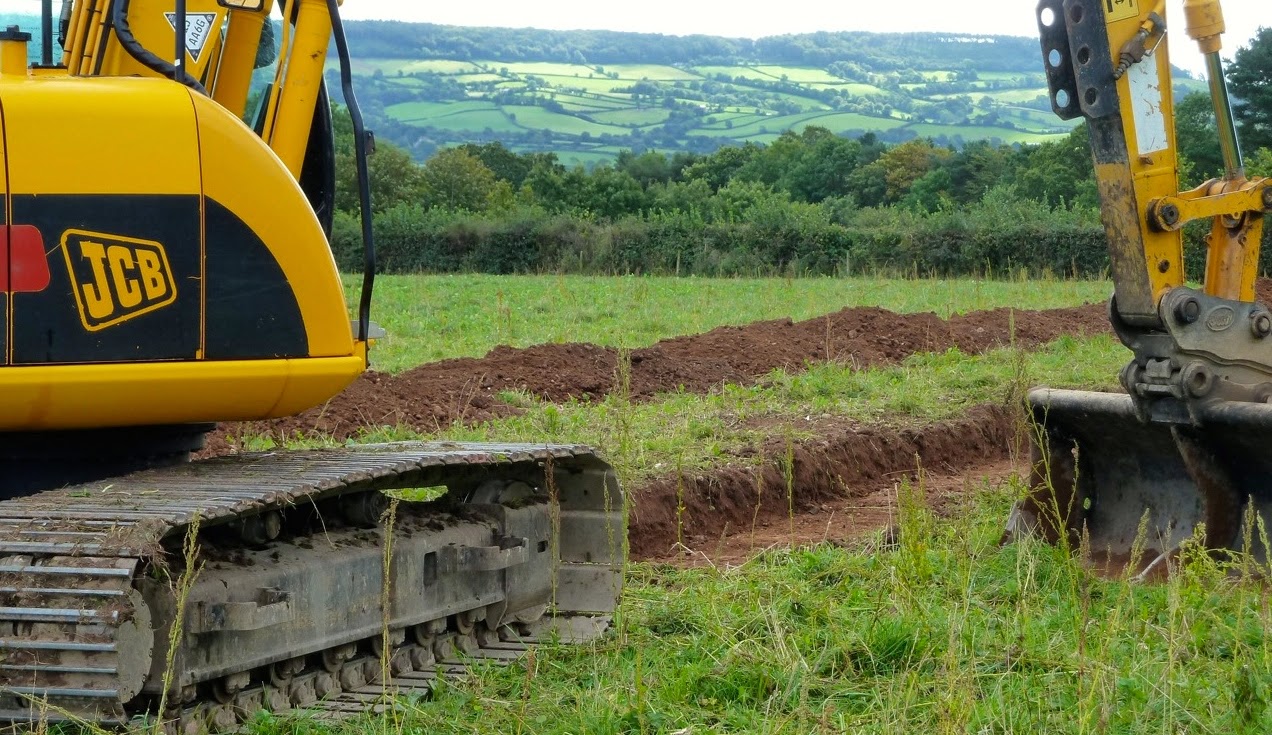
AI is already marking out its quarry


Exeter Airport’s response on birdstrike fails to consider the complete picture
Hedgerows provide a natural flood defence
AI plans to grub up almost two miles of ancient hedgerows at Straitgate
Spot the difference - 49 acre lake vs. ephemeral pond?
Devon Minerals Plan delayed again
Devon sand and gravel production for 2013, down on 2012

AI's answer for the dormice - an 'escape route'


2015 is likely to be a year when more help will be needed; AI is likely to be submitting its planning application, and DCC is likely to be consulting on, and formally submitting, its long-delayed Minerals Plan. Please spread the word to all those who may be able to assist in any way they can.

It is at least pleasing that readership of this blog and Twitter continues to grow. To all who read this, friend or foe, we wish you a Happy Christmas and Peaceful New Year.

Monday, 8 December 2014

Latest musings from Aggregate Industries’ trade body

MPA wonders why we need Minerals Plans at all

The Mineral Products Association continues to complain of inertia in the planning system, and claims that "unless the situation changes, at some point in the near future the options for maintaining a steady and adequate supply of aggregates could become seriously limited". Mineral planning applications apparently remain low, and the MPA thinks that "the lack of completed mineral development frameworks has had a significant contributory effect". And yet, the MPA also tells us that "the greater proportion of new permissions granted since 2006 were for sites that were not allocated in mineral plans" and "around 90% of all mineral applications are successful". The MPA says:
That speaks volumes about the health of the plan-led system and is worrying as it weakens an already difficult situation, since those who engage with the plan-led system are paying twice for gathering data and putting sites into the system, only to see other sites getting permission at lower cost. Either we have a plan led system, or we don’t - some are beginning to wonder why we need plans at all.

Next time you buy a 25kg bag of cement from B&Q (currently £5.90, 5 or more for £4.15 each), spare a thought, the MPA would say, for the cost pressures the industry is under - particularly carbon-related costs. The MPA claims the UK cement industry is being unfairly treated, but this is the same industry that for every 25kg bag puts around 25kg of CO2 into the atmosphere, the same industry that is responsible for somewhere between 5-10% of all man-made CO2 emissions. The UK cement industry has pledged to reduce its CO2, yet its emissions in 2013 were up on 2012; the words climate change appeared nowhere in the MPA's press release.


The MPA has yet again called on the Government to reduce the regulatory burdens its members face. It estimates that "environmental and planning-based regulatory costs are set to increase from £324 million in 2013 to £641 million pa in 2020". Is this overly burdensome, as the MPA argues, for a sector turning over £9 billion annually, or just an indication of the scale of the industry’s environmental impact?


The MPA has called on the Government to freeze the Aggregates Levy for 2015/16 and "following the conclusion of current legal processes, that there is a review process to assess the role and appropriate level for the Levy going forward". It also calls for "the introduction of an Aggregates Levy Community Fund to be considered at a lower cost than the previous Aggregates Levy Sustainability Fund, with more of a community and biodiversity focus".

Monday, 1 December 2014

More Straitgate history comes to light

We know that Straitgate has been farmed for thousands of years - in Neolithic, Iron Age and Roman times. Now more history has come to light, in the form of a number of legal documents from the 16th and 17th century; one contains an extensive list of covenants relating to Straitgate Farm - known around the time as StreateyateStreatyeate or Streatyeat.

The documents, dating from before the English Civil War, add yet more 'historical colour' to what is at stake, and what stands to be lost. They paint a picture of a Devon farm almost 400 years ago, of the farmland that Aggregate Industries - with the help its Swiss paymasters and your county council - is now plotting to destroy for good.

We hope to post transcripts in due course.

Friday, 21 November 2014

‘Straitgate’s not enough’ - AI wants more of our local area

Minerals planning in Devon has taken a new, bizarre and disturbing twist. No decisions have yet been made, but, according to DCC, ‘Straitgate may not be enough on its own’ - other areas around Ottery St Mary, West Hill and beyond may have to be earmarked as well.

And no, the sites at Penslade near Uffculme are not being ruled out either. In actual fact, if both Straitgate and Penslade are designated as Preferred Sites, that would cover any shortfall of sand and gravel for the Minerals Plan period to 2031 many times over, even if reserves at Houndaller near Hillhead are ignored. There should be no need to identify any further sites. So what’s going on?

First of all, Aggregate Industries obviously has little interest in Penslade - unless permission is refused for Straitgate. Secondly, Straitgate has a smaller available resource of sand and gravel than either AI or DCC had hoped - arguably not enough by itself to cover the expected shortfall in the Plan. AI clearly wants to be at Straitgate, but also wants to stay in the area once the Farm is exhausted. To facilitate this, DCC is considering making further provision in the Minerals Plan for this area. What DCC is now talking about, in addition to making Straitgate a Preferred Site, is identifying a more extensive 'Area of Search', in other words identifying the next areas for AI to quarry. BGS defines an 'Area of Search' as:
...broader areas where knowledge of mineral resources may be less certain than in Preferred Areas, but within which planning permissions could be granted to meet any shortfall in supply if suitable applications are made.
What area might it cover? It’s not known yet, but the best indication is this map, where the yellow indicates the extent of the Budleigh Salterton Pebble Beds, the sand and gravel that AI wants.


So much for DCC's idea 'that supply should be maintained from the northern and southern areas’. Nevertheless, most of this is no more than we have said before, that once AI gets a foothold in Straitgate it will move on to other farmland around Ottery St Mary, West Hill and beyond - quarrying here for generations to come; it already owns the mineral rights. What has changed is it now looks like DCC is working in tandem with AI to make it happen - opening the door for this Swiss multinational to wreck large parts of the Otter Valley. Huge areas are at risk; sites S1-S10 that had previously been excluded will now be looked at again. This is no longer just about Straitgate.

Wednesday, 19 November 2014

Devon Minerals Plan further delayed


Two passages to note from the report:
Further progress on developing proposals for sand and gravel supply has been limited by the delay in receiving further information from the potential mineral operator necessary to establish whether the constraints identified through the consultation are capable of being avoided or adequately mitigated. However, the operator has now undertaken extensive investigatory work and has indicated that the outcomes will be reported to the Council shortly to inform preparation of the Minerals Plan. [2.4]
It is anticipated that the pre-submission Minerals Plan will be reported to the Committee and Cabinet in June 2015 for approval for public consultation in advance of its subsequent submission to the Secretary of State. [3.1]

Straitgate planning application "in due course", confirms Aggregate Industries

A request was made in September to Aggregate Industries for copies of the archaeology trench plans. It was indicated that such plans would be forthcoming once certain amendments had been made; copies were freely shown to us on site visits.

As the archaeological investigations draw to a close, AI is now unwilling to share such plans; plans that show the position and nature of the farm’s geophysical anomalies, and indicate the revised extent of AI's proposed extraction area. Local people interested in the history of their surrounding area will instead have to wait for AI’s planning application and its environmental statement.

For those in any doubt it would get to this stage, AI has now confirmed that its application will be submitted "in due course".

And yet there is still no resolution of the outstanding issues with statutory agencies, and Devon still has no new Minerals Plan. It is a warning to local people, however, to be ready.

Monday, 17 November 2014

How much Roman archaeology has AI already destroyed at Straitgate Farm?


AI extracted 400 tonnes of sand and gravel from eight pits for testing.


All eight pits were dug in the field now showing extensive signs of settlement from the Roman period.


AI did engage someone to look for archaeology when the pits were first opened. He gave each pit a cursory glance after the top soil was removed, before giving the excavator the nod to continue. He failed to find anything – in a landscape that’s now proving to be rich in history going back thousands of years...

Monday, 10 November 2014

Somerset

Somerset’s Minerals Plan is at a much more advanced stage than Devon’s - after DCC’s prolonged wait for Aggregate Industries to prove the viability of Straitgate Farm. Somerset’s Plan was examined in September, and a list of modifications is now out for consultation from 5 November to 17 December.

Somerset has limited resources of sand and gravel, but is a significant producer of crushed rock. This meets some of its demand for sand and gravel, but otherwise Somerset is supplied by quarries in Dorset, Devon and elsewhere. Of the 378k tonnes of sand and gravel that Somerset 'imported' in 2009, 65% came from Dorset (mainly AI’s Chard Junction Quarry on the Dorset/Somerset border) and, if the numbers are to be believed, less than 10% came from Devon (mainly from Hanson’s Town Farm Quarry at Burlescombe, on the Devon/Somerset border, which produces around 170k tonnes pa) [SCC LAA 2013]. In 2009, Devon 'imported' 93k tonnes of sand and gravel from elsewhere; 'much is likely to have originated' from AI's Chard Junction Quarry [DCC LAA 6.4], which produces around 160k tonnes pa.

SCC LAA 2013
What worries Somerset, and plainly the Planning Inspector, is what happens when these quarries finish:
Somerset County Council is mindful that reserves at the Town Farm site in Devon are expected to run until the early 2020s and that the planning permission at Chard Junction expires in 2023 [SCC Statement Sep'14 5.3]
There is a potential resource of around 400k tonnes near Hanson's plant at Whiteball, near Wellington:
Extraction at Whiteball may be proposed on the Somerset side of the border during the next 10 years, moving from extraction on the Devon side of the border. Whilst this is unlikely to change Somerset’s approach towards sand and gravel policy, it will alter the import/export figures, leading to Somerset exporting to local markets in Devon. [SCC LAA 3.10]
But following public examination, SCC has been prompted to add a new paragraph, 6.78:
Somerset County Council encourages proposals to come forward for sand and gravel extraction that are in accordance with relevant policies in the Development Plan and contribute to sub-regional supply. Informed by updates to the Somerset Local Aggregate Assessment, the need for new sources of sand and gravel is anticipated to become more pressing in the early 2020s, notwithstanding there may be benefits of proposals coming forward more quickly. [SCC Statement Sep’14]
If Somerset is now looking for sand and gravel supplies from within its own borders, does this reduce how much Devon needs to allocate in its new Plan? Probably not. SCC said:
It would be premature for the Plan to allocate sites for sand & gravel at this stage, noting the lack of interest from industry in sites for sand and gravel extraction in Somerset (except for interest in the continuation of Whiteball operations) and the lack of information on available resources other than those around the Whiteball operations. [SCC Statement Sep'14 6.9]
And DCC has already recognised the issue. In its latest LAA:
...during the later part of the period to 2031 covered by the LAA, some of the sand and gravel supply previously delivered from Devon will be met from Somerset through continued working at Whiteball. [3.25] However, this supply from Somerset will be offset by the likely cessation of supply of sand and gravel from Dorset, as Chard Junction Quarry, located close to the boundary with Devon and supplying materials into the east of the county, is anticipated to cease working in 2022/23. [3.26]
From a strategic point of view, this likely cessation of supply of sand and gravel from Dorset into the east of the county is probably another reason why Straitgate is so important to AI.

Miscellaneous

The site comprised the existing quarry together with an area of 34 hectares identified as preferred sites in the minerals local plan…. The council concluded that the need for the mineral had been proven through the site’s allocation in the mineral local plan.
The risk to a protected aquifer in Hertfordshire was sufficient reason for an inspector to dismiss an appeal involving the extraction of sand and gravel from land in the green belt.
Extractive companies contribute in a number of ways, said committee chair Adrian Bailey. But reports of poor practice around the world are a concern and give extractive industries a bad name. To improve the performance and accountability of mining firms, a tough social responsibility index needs to be developed in the UK, which features all extractive companies listing here.
4. Group of experts calls for national minerals strategy to meet the UK’s needs up to 2050
Continued access to minerals in the UK should not be at the expense of adverse impacts on the environment. So far the UK has generally been able to secure adequate and steady supplies within a highly protective environmental framework, and with care this should still be possible.
The community has really rallied together to fight these plans. I think the proposal is an absolute abomination and will totally ruin Shelford Valley. It is completely outrageous.
Delays to the end of work at [AI's] Uttoxeter Quarry has been an on-going issue for residents and the latest plan could see it delayed until the 2020s.

8. Crickley Hill Iron Age battle site preserved
Iron Age battle site containing the remains of a hill fort has been given legal protection by English Heritage
The team of archaeologists, who unearthed the remains of a 2,000 year old Iron Age and Roman settlement and two medieval and post-medieval stone-constructed buildings in December 2012, will be presenting their findings to local residents and interested groups.