Showing posts sorted by relevance for query HVO. Sort by date Show all posts

Thursday, 25 January 2024

HVO – where on earth will all the used cooking oil come from?

Aggregate Industries’ magical solution to its unsustainable 2.5 million mile haulage scheme for Straitgate Farm – a result of processing the as-dug sand and gravel 23 miles away at Hillhead near Uffculme – is to rely on hydrotreated vegetable oil, HVO, despite, as of early 2024, HVO being around 40 pence per litre more expensive than normal diesel

Condition 22 of the planning permission to quarry the farm says: 
Prior to the export of any sand or gravel from the site, a scheme which ensures that all heavy goods vehicles entering and leaving the site, together with all plant and equipment located within the site, use hydrotreated vegetable oil fuel shall be submitted to and approved in writing by the Mineral Planning Authority. The scheme shall include details of how the use of hydrotreated vegetable oil fuel will be monitored to secure compliance with this condition. All heavy goods vehicles and plant shall be used in accordance with the approved scheme. 
In 2022, we posted HVO – AI’s answer to the Straitgate sustainability issue – gets bad press and questioned how the company's HVO scheme would work in practice: 
How this would be done is anybody’s guess, since the company does not own its own fleet of trucks and HVO is not available on garage forecourts – as Devon County Council pointed out. How this would be monitored and policed is another issue – as the Council also acknowledged
We also posted that HVO is blamed for indirectly "encouraging more deforestation in Southeast Asia" with some research claiming it’s "three times worse for the climate than regular diesel when indirect emissions from changes in the use of land are accounted for". How so? HVO is primarily made from used cooking oils, UCO, which is used in the production of animal feed. Increased demand for UCO will lead to increasing use of palm oil as a replacement, therefore increasing deforestation. Across Europe, imports account for more than half of the UCO that's made into fuel. According to this study, there's no way to prove these imports are sustainable: 
China supplies over a third (34%) of Europe’s UCO imports while almost a fifth (19%) comes from major palm oil producers Malaysia and Indonesia combined. Within a decade the volume Europe needs could double to 6 million tonnes as EU countries strive to meet targets for renewable fuels in transport, the study finds. This in turn could trigger palm oil being used to replace cooking oil in exporting countries while also incentivising fraud (mixing virgin oil).
HVO is fully compatible with petroleum diesel and can also be upgraded for use as ‘Sustainable Aviation Fuel’ (SAF). 
According to Ryanair’s Michael O’Leary, sustainable aviation fuels are a con.

They’re a wheeze. Unless governments get in behind the production and sourcing of sustainable aviation fuels – and they’re only going to come from, ultimately, the oil majors, the only ones who are going to make them – I don’t see where we will get the supply in the volumes we need. You want everybody running around collecting fucking cooking oil? There isn’t enough cooking oil in the world to power more than one day’s aviation. 
Whilst Ryanair has deals with oil majors for up to 9.5% of its fuel needs in SAF by 2030, O’Leary said: 
But we have no idea that they’ll be able to make those kinds of volumes. 
Whilst capacity for HVO is forecast to double by 2028, demand is set to outstrip supply

Aggregate Industries is new to the HVO scene. In June last year, the company made a big song and dance about a single HVO-fuelled cement tanker being a "UK biofuel first". For Straitgate, it is conditioned, as pointed out above, that all the trucks, and all the plant and equipment located within the site, will need to use HVO.
 

At our Bardon Hill Quarry we are replacing diesel with HVO on equipment such as generators, compressors and crushing and screening plant. All of our HVO is traceable to source under the International Sustainability & Carbon Certification Scheme, does not result in any deforestation and will save an estimated 3,301 tonnes of CO2e at Bardon Hill. The savings from this, together with our suspended conveyor system saves enough carbon annually equivalent to driving a car 26,000 miles. 
Which is all very commendable – albeit the 26k miles is insignificant compared with the company’s HGV haulage plan for Straitgate. But whilst it may be possible to claim that the HVO used by AI does not directly cause deforestation, proving it does not indirectly cause it, proving that the UCO used in making its HVO is not causing more palm oil to be grown elsewhere as a replacement, is another matter. 

The concern must be that if every corporate is now going to be greenwashing their pollution away with the delights of HVO, where on earth will all the used cooking oil come from? And how many millions more acres of rainforest will have to be cleared to replace it? 

Almuth Ernsting of NGO Biofuelwatch warns
We are deeply concerned that HVO is being used and promoted in ever more sectors, from aviation fuels to cars and now as a heating fuel, too. While a limited amount of HVO can be made from genuine waste products such as used cooking oil, such waste products are in very short supply and come nowhere near meeting current HVO demand... EU and UK biofuel sustainability and greenhouse gas standards still permit biofuels from palm oil and soy to count towards renewable energy targets, and they are based on a flawed greenhouse gas methodology which ignores the greatest source of emissions – indirect land use change.

Monday, 21 November 2022

HVO – AI’s answer to the Straitgate sustainability issue – gets bad press

Aggregate Industries’ answer to the 2.5 million mile haulage scheme for its Straitgate Farm planning application is to claim that the HGVs hauling as-dug sand and gravel to Uffculme for processing would run on chip fat biofuel, or HVO as it's commonly known – hydrotreated vegetable oil. 

How this would be done is anybody’s guess, since the company does not own its own fleet of trucks and HVO is not available on garage forecourts – as Devon County Council pointed out. How this would be monitored and policed is another issue – as the Council also acknowledged. HVO was part of the S106 heads of terms when the application was originally determined, part of the legally enforceable planning obligations; now the HVO proposal finds itself as another planning condition – and we know the problems with enforcing those. 

Devon County Council’s barrister said in his closing submission
206. The Appellant’s proffered obligation/suggested condition (it is difficult to keep track – it was in the draft s.106 but seemingly no longer) that the vehicles use HVO goes nowhere. Mr Gould gave up that he can point to no example of the use of HVO in the aggregates setting. This is, as was put to him, innovative technology (he denied that, before being taken to his Proof as “innovative” is his own word). There can be no reliance placed upon it. Nor has there been any evidence from the Appellant as to how the MPA might hope to monitor so as to ensure HVO is being used. The Appellant’s suggested condition does not begin to answer matters: it simply seeks to kick the can down the road and require the question of whether monitoring is possible to be addressed later. Not good enough. To be addressed now. 
Mr Gould, who represented Aggregate Industries, preposterously claimed "the proposal minimises transport of minerals with innovative solutions to help achieve this". 

Apart from all that, uptake of HVO is being rejected by a number of organisations, including the Environment Agency and others: 


Even before determination last year, we pointed to the fact that rising imports of used cooking oil into the UK for biodiesel is indirectly "encouraging more deforestation in Southeast Asia" with some research claiming it’s "three times worse for the climate than regular diesel when indirect emissions from changes in the use of land are accounted for". 

Others have problems with it too. HVO is primarily made from used cooking oils or UCO:
According to Jo Gilroy, Balfour Beatty’s group sustainability director, it is simply a matter of due diligence. “We’re very good at jumping on solutions and thinking they’re the answer to our problems, aren’t we?” she says. “We look for easy wins, and HVO looked like that. 
“But any one-hit wonder solution needs to be examined carefully; you always have to do your due diligence.” 
As momentum built in favour of HVO, Balfour Beatty decided it had to delve deeper into the sustainability claims being made for the fuel before approving its use. And what it has found so far has only raised doubts. 
The chemistry of HVO is well understood but less clear is the sustainability of its supply chain. “What does the supply chain look like?” demands Gilroy, “Nobody knows - it’s very complex and there’s very little transparency.” 
One of the big attractions of HVO is that it purports to transform a troublesome waste material into a valuable commodity. But Gilroy says this is misleading: “UCO has always been used in the production of animal feed – it’s not a waste product,” she says. 
This might appear to be a mere technicality, but if one industry’s feedstock is diverted to supply another industry’s needs, alternative sources must be found. If producers of animal feed cannot obtain enough raw material in the form of UCO, they will turn to primary sources, namely commercially-grown vegetable oils such as palm oil. 
Mention palm oil and you open a whole new environmental can of worms...
Balfour Beatty’s Position paper on HVO can be found here
There is a high risk that the resulting increase in demand for used cooking oil is causing deforestation and the draining of peatland and marshland in countries such as Malaysia and Indonesia where farmers are having to grow palm oil to produce animal feedstock. Such displacement activity has an extremely damaging impact on the environment: these areas store large amounts of carbon, so clearing them would lead to a significant increase in carbon emissions in those countries. EU research indicates that once the effects of land use change and draining of peatland are accounted for, the GHG impact of palm-oil derived HVO could be up to 3 times greater than standard fossil fuel diesel.

Wednesday, 9 April 2025

UK investigating fraud claims alleging ‘green’ HVO diesel contains virgin palm oil

The wonder fuel that Holcim UK (formerly Aggregate Industries) has pledged to use to extract and haul material from Straitgate is in trouble. 

We have posted about HVO or hydrotreated vegetable oil fuel before. Condition 22 of Holcim UK’s planning permission to quarry Straitgate Farm says: 
Prior to the export of any sand or gravel from the site, a scheme which ensures that all heavy goods vehicles entering and leaving the site, together with all plant and equipment located within the site, use hydrotreated vegetable oil fuel shall be submitted to and approved in writing by the Mineral Planning Authority. The scheme shall include details of how the use of hydrotreated vegetable oil fuel will be monitored to secure compliance with this condition. All heavy goods vehicles and plant shall be used in accordance with the approved scheme. 
Aggregate Industries’ magical solution to its unsustainable 2.5 million mile haulage scheme for Straitgate Farm – a result of processing the as-dug sand and gravel 23 miles away at Hillhead near Uffculme – is to rely on hydrotreated vegetable oil, HVO, despite, as of early 2024, HVO being around 40 pence per litre more expensive than normal diesel... 

The concern must be that if every corporate is now going to be greenwashing their pollution away with the delights of HVO, where on earth will all the used cooking oil come from? And how many millions more acres of rainforest will have to be cleared to replace it? 
 ... industry whistleblowers told the BBC they believe large amounts of these materials are not waste but instead are virgin palm oil, which is being fraudulently relabelled. 

And data analysed by the BBC and shared with the UK's Department for Transport casts further doubt on one of the key ingredients in HVO, a material called palm sludge waste. 

Europe used more of this waste in HVO and other biofuels in 2023 than it is thought possible for the world to produce. 

UK consumption rocketed from 8 million litres in 2019 to about 699 million litres in 2024, according to provisional government figures. 

Its green credentials rely heavily on the assumption that it is made from waste sources, particularly used cooking oil or the waste sludge from palm oil production. 

But industry whistle-blowers have told the BBC that they believe virgin palm oil and other non-waste materials are often being used instead... 

"It's a very easy game," said Dr Christian Bickert, a German farmer and editor with experience in biofuels, who believes that much of the HVO made with these waste products is "fake". 

"Chemically, the sludge and the pure palm oil are absolutely the same because they come from the same plant, and also from the same production facilities in Indonesia," he told BBC News. 

"There's no paper which proves [the fraud], no paper at all, but the figures tell a clear story." 
Construction company Balfour Beatty has a policy of not using the fuel, citing sustainability concerns:
"We just are not able to get any level of visibility over the supply chain of HVO that would give us that level of assurance that this is truly a sustainable product," Balfour Beatty's Jo Gilroy told BBC News.

Wednesday, 10 April 2024

Aggregate Industries appoints a new sustainability director, again

In June 2021, Kirstin McCarthy joined Aggregate Industries.


The position was new for Aggregate Industries. CEO, Dragan Maksimovic, proudly proclaimed: 
This appointment is placing us in a unique position at the forefront of our industry and we must continue challenging ourselves to continuously reduce our carbon footprint through innovation, commitment and personal accountability. 
Ms McCarthy added
I look forward to making my mark as the newest member of the executive committee and contributing to building a greener, smarter world for all. 
Six months later, Kirstin McCarthy came to County Hall in Exeter, to present to the councillors on the Development Management Committee, who were determining Aggregate Industries’ long-running planning application to quarry Straitgate Farm – see 24 minutes into this video.

Despite being new to the minerals industry, she was one of only two speakers put forward by Aggregate Industries. Clearly the company feared the proposal’s sustainability – or lack of – might be an issue.
My name is Kirstin McCarthy and I am the sustainability director at Aggregate Industries. I sit on the executive committee and I’m responsible for improving and accelerating our sustainability performance. I took a key interest in this application owing to some of the environmental concerns raised by the community. I have personally reviewed the environmental statement and feedback to date. My role here today is to provide assurance that this scheme will not have the detrimental effect that has been described by some of our objectors and most importantly I am here to listen to the concerns raised by our neighbours so that we can understand what work is required with the community to hopefully allay some of these fears.... etc etc 

Straitgate is sustainable because it’s about Devon making its contribution to the mineral supply in an environmentally responsible manner
Stirring words, but there was nothing about the wholly unsustainable 2.5 million miles in total that material would need to be hauled for processing, at a plant 23 miles away. 

That thorny issue had been greenwashed away in a S106 agreement that came to light a few days before the DMC meeting. No doubt fearing a backlash from decision makers, Aggregate Industries had committed to only using HVO fuel in the HGVs and onsite equipment. Fantastic news you might think, but some studies put HVO worse than regular diesel when changes in land use are accounted for. Even so, it has hefty financial implications, given the price premium of HVO, the intensive haulage plan, and the 7mpg or less managed by HGVs. 

What part Ms McCarthy played in the HVO decision, what mark she made as newest member of the executive committee, we will never know, but despite this commitment, and others, her presentation plainly didn’t cut it with councillors, who voted to refuse Aggregate Industries plans by 5 votes to 0, with 3 abstentions

Of course, as we all know, the company appealed and a Public Inquiry was held in 2022, which led to the decision being overturned

Elsewhere in the construction world, in December of that year, another sustainability director was being appointed – in this case Anna Baker at Kier Construction
Anna’s drive to really make a difference and proven ability to see the big picture will complement the work being done across the Group to achieve our targets in sustainability.
Anna Baker added
This is an exciting time to join Kier, a business I’ve long admired. With so much great work already underway, I’m looking forward to bringing my experience to the role and leading on the next steps of Kier’s sustainability journey for the Construction business.
The exciting times didn’t last. This month, little more than a year later, we find Anna Baker has joined Aggregate Industries as its Sustainability Director
Anna brings more than 20 years’ experience in sustainability within the construction industry and is responsible for accelerating the company’s journey to net-zero before 2050. 
Kirstin McCarthy, has moved on to sunnier climes: 
I’m happy to share that I'm starting a new position as Director of Sustainability at Sandals Resorts International! 
And who can blame her? 

This now means that – together with the Quarry Manager – both of Aggregate Industries' representatives at the 1 December DMC meeting have left the company. No wonder we asked
Is there anybody left working at Aggregate Industries who has played a meaningful part in putting together the plans to quarry Straitgate Farm?

EDIT 15.4.24 Aggregate Industries appoint new sustainability director:
Commenting on her new role, Ms Baker said: ‘Aggregate Industries is a future-focused and innovative company with sustainability at the heart of its vision. I’m thrilled to be joining this business and look forward to working alongside the talented teams here to deliver an ambitious sustainability agenda that will add real value for our customers and communities.’

Monday, 6 May 2024

Ignominious twist: Straitgate may have to be mothballed until better times – says AI

At the Public Inquiry in October 2022, Aggregate Industries assured Government Planning Inspectors that the need for minerals from Straitgate Farm was "urgent": 
8.3 The landbank for Devon is below the required 7 year supply and as such the need can be considered as urgent. Combined with the lack of supply in the wider region which is detailed in the follow paragraphs, the need for the development is indeed considered urgent. 
Aggregate Industries’ Mr Kimblin KC concluded in his closing statement: 
170. The essential planning circumstances in this case are so very simple. The appeal site is one of two allocations in the DMP and the site is needed in order to maintain a steady and adequate supply of minerals, which the MPA is presently failing to provide. 
Needed. Urgent. So very simple. 

And yet, after struggling over many, many years to win planning permission to quarry Straitgate Farm – after fighting tooth and nail to make sure the site was in the Minerals Plan, after extensive site investigations, after two failed planning applications and a successful, but time-consuming and expensive appeal, after putting local people through decades of blight and aggravation – Aggregate Industries is now talking about mothballing the site.

How has it come to this? 

Around the same time Aggregate Industries’ representatives made those claims to Planning Inspectors, another aggregates company in Devon was having altogether different concerns. It was not thinking needed and urgent. Precisely the reverse. 

Aggregate Industries is not the only company in Devon with reserves of sand and gravel from the Budleigh Salterton Pebble Beds, the material that underlies Straitgate Farm. 

Heidelberg Materials – or Hanson under a previous guise – owns Town Farm Quarry near Burlescombe in Mid Devon, close to the Devon/Somerset border. As-dug mineral from this quarry has previously been processed at Whiteball Quarry, 2 miles away in Somerset, which is itself only 4 miles away from Aggregate Industries’ Hillhead Quarry, where Straitgate material would be processed. 

Heidelberg’s permission for Town Farm – extended in 2023 – does not have the same long list of restrictive constraints that faces Aggregate Industries at Straitgate Farm. Town Farm material does not need to be transported 23 miles between quarry face and processing plant, neither does it need to be worked and hauled using equipment and HGVs fuelled with expensive HVO

And yet, even without these cost constraints, Heidelberg is not currently able to make the numbers work at the Town Farm and Whiteball sites, both of which were mothballed in 2023. Last year, a Devon County Council Monitoring Report stated: 
As of 1st February 2023 it was confirmed that it has been necessary for Hanson to undertake a review of its Whiteball and Town Farm operations due to current economic conditions, in order to cut production capacity and reduce overheads and the decision has been made to temporarily mothball the Town Farm site until market conditions improve. 
This year's Monitoring Report tells the same story. Heidelberg says the operation is still closed
A number of issues will have conspired against Heidelberg: energy costs, red diesel rebate loss, interest rates, house-building slump, Liz Truss etc. The situation is unlikely to change anytime soon. Last week, the Mineral Products Association reported that "weakness persists for heavyside building materials": 
....ready-mixed concrete sales have plummeted to historically low levels, hit by the contraction in housebuilding, which compounded longer-term weaknesses in demand from new commercial offices and retail projects which have been subdued since 2017. 
...demand for primary aggregates has been supported by the requirement for bulk fill materials on major infrastructure projects, particularly from HS2, but the lack of significant new infrastructure projects outside of the country’s only major rail scheme remains a concern.
The Construction Products Association says the sector is heading for a worse recession this year than previously expected.

Aggregate Industries will have been cock-a-hoop last year to have finally won the keys to plunder the green fields of Straitgate Farm, but, at a meeting last month, the company admitted that economic conditions are not currently conducive to the viability of Straitgate, and that once the permission is implemented the site could be mothballed.

Questioned more on the subject, the company would not be drawn further:
... we have 10 years from the date of commencement to extract the mineral and that remains our intention.
However, even with a fair wind, it’s hard to see Aggregate Industries ever making the figures work for the site – given the gargantuan haulage distances involved and the HVO fuel premium.

But hey. If the company has backed itself into an uneconomic corner, it has no-one but itself to blame; no-one forced the company to process the Straitgate material 23 miles away – a 46-mile round trip for every load of as-dug material, material that includes a 20% waste factor – or to work the site and haul material using expensive HVO fuel. It came up with those ideas all by itself. 

As far as we’re concerned, however, the writing has been on the wall for some time. We’ve been questioning the viability of the site since long before this early post in 2012 – pointing to the fact that the company has access to little more than 5% of the material first thought possible, and asking What is AI’s bottom line, because it surely can’t be profit?

In fact, so concerned were we for Aggregate Industries' financial wellbeing – haha – we even created a viability label. Given the amount the company will have spent on winning those green-field keys – after a decade of fees to consultants and lawyers – the company should have perhaps heeded our advice.

But when did Aggregate Industries ever listen to Joe Public?

Thursday, 22 May 2025

VICTORY AT LAST – Holcim ABANDONS permission to quarry Straitgate Farm

Fantastic news! Decades of unwavering local activism has finally won through.

Aggregate Industries' ludicrous plan to quarry Straitgate Farm in East Devon is dead, kaput, finito!


Today it has been confirmed that the company has abandoned its planning permission to quarry the site and has now sold the farm to the existing tenants.

A confirmation letter from Holcim UK to Devon County Council can be found here.

A press release from Straitgate Action Group can be found here.

We will continue to refer to the company here as Aggregate Industries – although it was rebadged earlier this year as Holcim UK, being a long-time subsidiary of the Swiss-based multinational – since that's the name so indelibly etched in the minds of local people, given the decades it has spent blighting their lives.

That blight has finally come to an end. Despite relentless attempts – over many, many years – Aggregate Industries has finally had to admit defeat. Its plans could not work.

By walking away from Straitgate, neither the company nor the County will run short of aggregate – for anyone at all concerned. In February this year, the company submitted an application to quarry 3.9 million tonnes of sand and gravel at Penslade as an extension to its Hillhead Quarry near Uffculme. 

This monumental David vs Goliath victory – achieved against the deep pockets of the world's largest cement producer – stands as a testament to the power of local community action.


It means that the treasured landscape at Straitgate, with its network of ancient hedgerows and oak trees, habitat for dormice and bats, has been saved. Straitgate Farm, with its Grade II listed Devon longhouse, will remain a farm. The tenants, whose family has farmed the land for nearly 100 years, can continue to farm in peace. Nearby Cadhay has the assurance that the aquifer at Straitgate will remain undisturbed, so the water supply for the Grade I listed house, the Grade II listed gardens and mediaeval fishponds, and the wetland habitats in the ancient woodlands of Cadhay Bog and Cadhay Wood, will now be secure going forward. 


All the many other people in the area wholly reliant on springs and wells for their water supply can also breathe a sigh of relief. Any increased risk of flooding to Ottery St Mary from mineral working on the slopes above the town has been removed. Exeter Road will not have to contend with an extra 200 HGV movements per day and the dangers this would bring. Birdcage Lane will remain unchanged – a safe local amenity for its wide variety of users. There will be no risk of bird-attracting water bodies – like the ones at nearby Blackhill Quarry – being formed under the flight path of Exeter Airport. 


There will be no eyesore from East Hill, part of the East Devon National Landscape. Our climate, environment, and roads will be better off to the tune of some 2.5 million HGV miles.

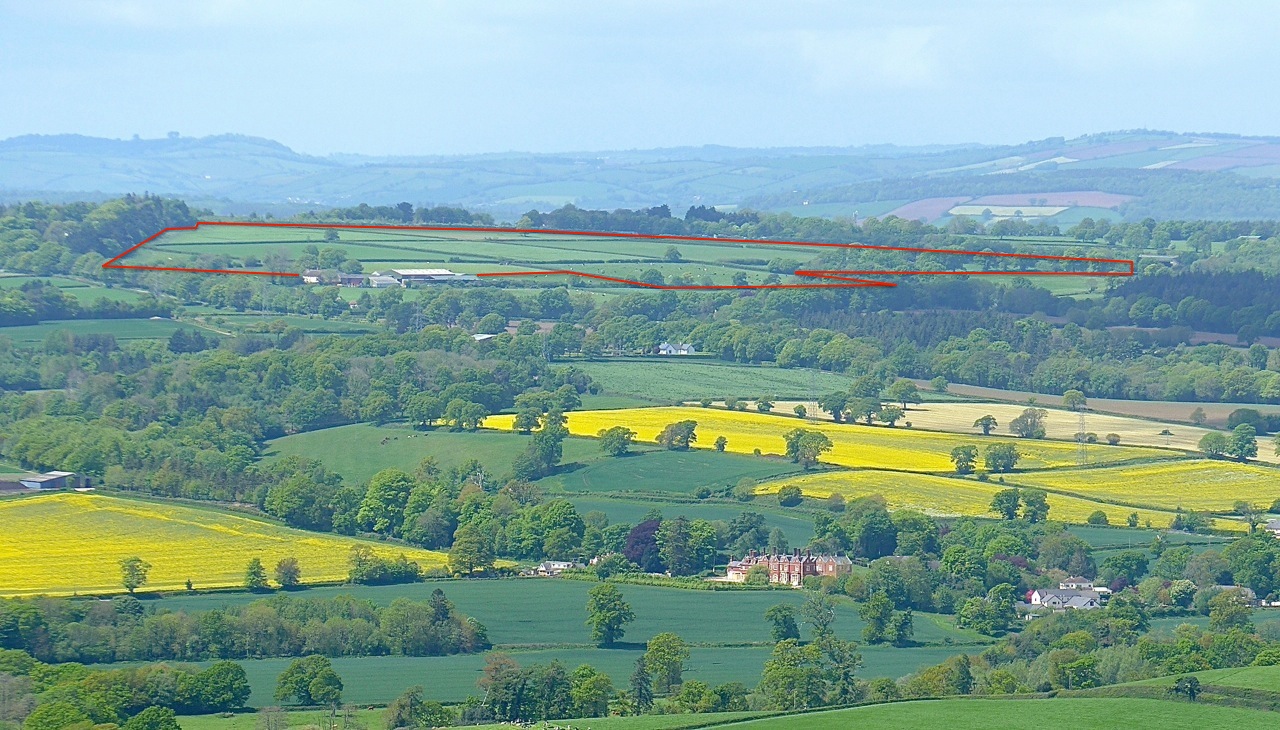
Thankfully, Straitgate will no longer risk looking anything like this:


This is a huge and embarrassing failure for Aggregate Industries. The company has squandered hundreds of thousands – if not millions – of pounds pushing a venture that was not only unsustainable, but clearly uneconomic and fraught with problems. 

Aggregate Industries' pursuit of Straitgate has loomed over our community for decades – blighting lives, scuppering house sales, causing untold stress, anguish and expense. The company has shown it couldn’t care less. There’s little evidence to back Aggregate Industries’ claim of being: 
A company that is intrinsically sustainable - trusted and respected by stakeholders and the communities in which we operate. 
Stopping a quarry at Straitgate has been an exceptionally long struggle – perhaps one of the longest-running community campaigns against a development in Britain.

Straitgate Farm is situated in East Devon in the Otter Valley, close to Ottery St Mary, a beautiful market town steeped in history and tradition, famed for its fiery tar barrel tradition, its magnificent church, and its ties to the celebrated poet Samuel Taylor Coleridge. The town lies along the winding River Otter, where England’s first wild breeding beaver population in over 400 years was discovered. Straitgate Farm lies on the B3174 Exeter Road, a key route connecting Ottery St Mary to Exeter. It is part of a region characterised by rolling hills, farmland, and natural beauty. Records of Straitgate Farm date back to at least the sixteenth century.


The first planning application to quarry Straitgate Farm was submitted in 1967 by English China Clays, a predecessor company.


A public inquiry followed, attracting representations from many local people and organisations, including Oliver William-Powlett from Cadhay, Ottery St Mary Urban District Council, and the West Hill Ratepayers Association. Permission was refused on the grounds of risk to groundwater and prematurity.


We first became involved in March 2000, joining with other local residents opposed to Aggregate Industries’ push for the continued inclusion of Straitgate in the Minerals Local Plan. A key meeting was held at Cadhay in November 2001, in readiness for a public inquiry the following year. The name Straitgate Action Group was coined by a local journalist, and it stuck.
 

The group’s subsequent campaign was successful, and in 2003 Straitgate was knocked out of the Plan.

In 2010, when preparations started for a new Minerals Plan, Aggregate Industries again pushed for the inclusion of Straitgate. The company claimed some 8 million tonnes of sand and gravel were available at the site, giving any quarry an estimated lifetime of "approximately 20-25 years based on 350,000 tonnes/year". 

In 2012, well-attended meetings at West Hill Village Hall and Ottery St Mary Football Club conveyed the community’s deep concerns to Devon County Council. 


In the same year, we started A blog for Straitgate, never imagining that 13 years and 1,800 posts later we’d still be going, with enough material to fill a book.

Delays and expensive site investigations by the company were to follow. In 2013, ecological surveys found protected species, including at least eleven species of bats, and dormice


In 2014, archaeological investigations found extensive evidence of Iron Age and Roman settlements


Monitoring of the groundwater, which had started in 2013 with the drilling of 11 new boreholes, showed how sensitive surrounding springs, wells and streams would be to any mineral extraction, and, as a result of groundwater levels, how little material there would in reality be available to the company. For a whole year, the company wouldn't come clean on the fact that the depth of material that would remain unquarried above the maximum water table, to protect surrounding water supplies, was set to be zerounlike elsewhere, and its recent application for Penslade where "the base of mineral extraction has been set at 1m above maximum recorded groundwater levels". 

However, following another public inquiry, the company was this time successful. Straitgate Farm was formally adopted in 2017 as a Preferred Area for sand and gravel extraction in the Devon Minerals Plan – but, downgraded from the proposed Specific Site designation, and, crucially, for a much reduced figure of "up to 1.2 million tonnes from extraction above the protected water table". 


Aggregate Industries’ first application to quarry Straitgate was submitted in 2015. Even then its plans were unsustainable, with the intention being to process material 8 miles away at Blackhill Quarry. A spokesman said the application was "the culmination of three years of careful planning...", but nine months later the company was forced to withdraw the application after it became clear it did not have the necessary rights over third-party land to implement its site access plans, and that permission to continue processing at Blackhill, on the protected Pebblebed Heaths, would not be forthcoming. The latter was a victory in itself for those of us wanting to see an end to Aggregate Industries' industrialisation of Woodbury Common in the East Devon AONB, and all the associated HGV traffic


With the application to quarry Straitgate Farm delayed, the company made a planning application to import a limited amount of material into Blackhill for processing before the quarry’s closure. Permission was granted but never implemented, and mobile plant was subsequently installed at Hillhead, later to be replaced with the plant from Blackhill.

In 2017, the company submitted a revised application for Straitgate, with the proposed site entrance in a new location, and the material to be processed at Hillhead near Uffculme, a staggering 23 miles away from Straitgate, an option that the company had previously dismissed:

Over all the years of following this debacle, we've not come across anything similar - where 23 miles of public roads separate quarry face and processing plant, where 46 miles is clocked up before the product is even sold. And why would we? Profit margins on sand and gravel normally restrict the supply radius to 30 miles or so.

Both applications drew a huge public backlash, and hundreds of objections were lodged with Devon County Council. Scrutiny of the company’s plans in relation to the Straitgate site revealed a multitude of substantive issues, including the cattle crossing conundrum


Whether due to the nature of these issues or the company's ineptness, or both, an inordinate period of almost five years followed, while Aggregate Industries floundered searching for solutions. During that time, it drilled 7 more boreholes for additional groundwater monitoring, and secured a separate permission for a livestock crossing to enable the cows to access alternative pasture – a permission since expired

Also during those five years, Professor Brassington – a leading expert in hydrogeology – warned that any quarrying at Straitgate would irreversibly damage water sources. It became clear that the company was relying on an unorthodox seasonal working scheme – for a site where groundwater levels can rise 1m in 5 days – to extract down to a guesstimate of the maximum water table, a guesstimate subsequently proven to be wrong multiple times in multiple locations, in one location by 2.8 metres. Some areas would be underwater, even the loading area. In other areas, there would be no recoverable resource at all.


At the end of that period, serious issues remained unresolved. For instance, there were still key uncertainties with hydrogeology and drainage, because Aggregate Industries had failed to undertake the necessary additional testing.

On 1 December 2021, the Straitgate application finally came before Devon County Council's planning committee. Despite being recommended for approval by planning officersthe application was refused, following powerful representations from members of the public, experts, councillors and the group. As our planning lawyer, Tim Taylor, told the committee: 
this application... is littered with inconsistencies, inaccuracies, and erroneous and/or missing information. Put simply, it is a botched application by the applicant and reads like one.
There were seven clear reasons for refusal, namely harm to the setting of heritage assets, potential harm to private water supplies, lack of a safe and suitable access in relation to the proposed cattle crossing and bus stop provision for school children, insufficient up-to-date wildlife survey information, an insufficiently detailed surface water management plan, unacceptable loss of mature trees and hedgerows, and the unsustainable distance between the proposed quarry and processing location.


However, Aggregate Industries thought it knew better and appealed the decision. In October 2022, a costly public inquiry ensued – costly not only for Aggregate Industries and Devon County Council, but also for the local people who supported the group, which hired a barrister from Landmark Chambers and participated as a Rule 6 Party. What sort of costs? Last year, for example, Gloucestershire mineral operator Cullimore Group reported that its appeal costs for an undefended day-long hearing were nearly £200,000. By contrast, Devon County Council defended all seven reasons for refusal, and, for two weeks, three barristers fought it out in front of two Planning Inspectors. 

Representations were again made by members of the public, councillors and the group. A multitude of expert witnesses were called, including a number representing the group. Aggregate Industries was so concerned about Professor Brassington's arguments that it wheeled out not one but two hydrogeology experts. It should have saved itself – and the rest of us – the bother. 

Whilst the Planning Inspectors granted the company permission on 5 January 2023 – to the surprise of many, and no doubt the company too – some viewed Aggregate Industries' victory as pyrrhic.


To make the development acceptable in planning terms and to mitigate the risks exposed during years of scrutiny, the Inspectors imposed 53 conditions – some pre-commencement, and many onerous. On top of these, the company was left with just "1.06 million tonnes of saleable aggregate" located 23 miles away from the processing plant, with the added cost of HVO fuel mandated for excavation and haulage.

One condition – to reduce the risk of bird strike to overflying aircraft – even stipulated: 
25. No water body shall be created within the site other than the approved weigh bridge lagoon. 
Why might that have been challenging? Not only has every sand and gravel quarry we've seen in Devon included water bodies, but Aggregate Industries’ flood mitigation and restoration plans for Straitgate also positively encouraged their creation.


But, given the constraints of the site and the need for so many restrictive conditions, why was the appeal ever allowed? Richard Kimblin KC, who represented Aggregate Industries at the Inquiry, clearly thought he had a theory when, in the same year, he gave a presentation about Straitgate and five other sites in "Legal update - The perils of minerals decisions and how to avoid them". Presenting to the Minerals Planning Conference, he alluded to a pattern in these six sites: appeals were typically allowed where a site was allocated in a Minerals Local Plan, AND if there were no policies of restraint – in other words, if the site was neither in the Green Belt, nor in an AONB. Unfortunately, Straitgate ticked both boxes, as did Craig yr Hesg, and in both cases their appeals were allowed. Fortunately for Chard Junction, Ware Park, Hatfield and Lea Castle, all had policies of restraint and their appeals were dismissed.


Once the appeal was allowed, the company could still have walked away – having seen the mountain of onerous conditions imposed by the Planning Inspectors. But no. After a further 12 months, apparently thinking about the way forward, Aggregate Industries' executive committee sanctioned additional spend for the next stage, to cover expensive water monitoring schemes, as well as a raft of other work. In poker terms, the company was going all-in.


However, just a few months later, in April 2024, the economic writing was on the wall. Aggregate Industries indicated that, unless conditions improved, the Straitgate project would need to be mothballed. It was not surprising. Whilst Aggregate Industries argued at the Public Inquiry that the need for minerals from the site was "urgent", events on the ground indicated otherwise. Just a few miles away from where the Straitgate material would be processed, Heidelberg Materials was mothballing its own sand and gravel operation citing economic issues; at the time of writing, the operation is still closed. It now also transpires that in 2023, sand and gravel sales in Devon slumped to their lowest on record, down by 29% on the previous year. By delaying for so long, Aggregate Industries had seemingly missed its window of opportunity.

When questioned further on the issue, all Aggregate Industries would say is: 
... we have 10 years from the date of commencement to extract the mineral and that remains our intention.
As we posted at the time: 
If the company has backed itself into an uneconomic corner, it has no-one but itself to blame; no-one forced the company to process the Straitgate material 23 miles away – a 46-mile round trip for every load of as-dug material, material that includes a 20% waste factor – or to work the site and haul material using expensive HVO fuel. It came up with those ideas all by itself.
Notably, for its new application to quarry Penslade, the company has not proposed the use of HVO fuel, and haulage from the quarry face to the processing plant is along a short internal track, not 23 miles along the A30 and M5.

But we had been questioning the viability of Straitgate for years – even before this post in 2012 – pointing to the fact that the company now had access to little more than 5% of the material first thought possible, and asking What is AI’s bottom line, because it surely can’t be profit? We even created a viability label.

It will now come as little surprise to local people to learn that the company – with its army of consultants and lawyers – has not managed to meet its pre-commencement conditions. 

Aggregate Industries has therefore spent the last 10 years – 25 years if you include its efforts to secure the site’s inclusion in Minerals Plans – almost 60 years if you go back to when the farm was bought for aggregates by English China Clays in 1965 for £125,000, equivalent to £3 million in today’s money – on a futile quest, from what was once thought to be 20 million tonnes down to effectively zero.


We previously explained the debacle using the analogy You have two cows. This now needs amending: 
Aggregate Industries: You have two cows. You lose them both.
What's a typical length of time for a minerals application? In it’s latest Annual Mineral Planning Survey Report, the Mineral Products Association wrote that in 2023 for sand and gravel: 
the average time taken to determine a mineral planning application (pre-application through to a permission being issued) was 22.6 months
But it can sometimes take longer. When Lafarge abandoned its quarry proposal on the Isle of Harris after a battle lasting 13 years, it donated €50,000 for local sporting facilities as a gesture of goodwill, but even then the Western Isles Council's environmental chairman was scathing: 
For the future of an area to hang in the balance for 13 long years, with the consequent disincentive to other potential businesses, is, frankly, nothing short of a disgrace.
So, if 13 years is nothing short of a disgrace, how about 25 years?

Goodness knows how much money in total Aggregate Industries and its Zurich bean-counters have flushed down the toilet – instead of a gravel pit, Straitgate Farm has turned into a money pit.

The company should have heeded our advice in 2015, when we warned about the sunk cost fallacy
It’s time for Holcim's bean-counters to tell AI to stop throwing good money after bad and leave the farmers to get on with farming the land...
Perhaps it should study this comic strip from Doist:
Questions need to be asked: 

Why did Aggregate Industries continue to champion such a site knowing the constraints, knowing the relatively small amount of sand and gravel now available, knowing the considerable haulage distances that would be required for processing? 

When permission was eventually refused nearly seven years after submitting its first planning application, almost five years after the second, why did Aggregate Industries go to the considerable expense of appealing the decision, knowing how constrained and uneconomic the whole scheme was? 

Why did Aggregate Industries not listen to the local community, take heed of local knowledge, or work with local stakeholders?

When exactly did Aggregate Industries realise it couldn’t fulfil the pre-commencement planning conditions or make the numbers stack up? Has the company blighted lives longer than necessary?


So, where did it all go wrong for Aggregate Industries? With millions of tonnes of material initially on offer, and with the advantage of a Preferred Area designation in the Minerals Local Plan, and with no irritating policies of restraint to hinder things, and with the great weight that national planning policy affords to mineral extraction, and with an army of expensive lawyers and environmental consultants working on its behalf, and with no objections from the Environment Agency or other key statutory consultees, and with relatively few pesky residents living around the site, how on earth did the company manage to squander such a promising opportunity? 

Clearly, it looks like a case of corporate incompetence – a textbook example of how not to go about seeking permission to open a quarry. Aggregate Industries made one mistake after another.
 

As we wrote at the time:
If every minerals-related planning application went as disastrously as the one Aggregate Industries has spent the last 6 YEARS pursuing at Straitgate Farm, there would be no minerals industry.
Not only was there seemingly little consideration of viability, but there were also so many falsehoods that we created a label for them on this blog. By the end, the company still hadn't solved the cattle crossing issue. It still hadn’t properly measured infiltration rates, or produced a reliable surface water management plan. It still hadn't even been able to produce workable plans for the site entrance – not even for the third of its options put forward for the site, between the two TPO'd oak trees and the third-party hedgebank; another example of where it should have heeded our advice

pic name

Looking back, was there one overriding factor that saved Straitgate Farm? Was it the TPO on the Birdcage Lane oak trees? Was it the issues surrounding groundwater and private water supplies, and all the associated monitoring required? Was it the cost burden of the excessive haulage distance and the requirement to use HVO fuel? Was it the slump in sand and gravel sales? Was it the brave tenants, and their displaced cows that would need to cross the Exeter Road 4-times daily? Was it the doggedness of the local community? Or was it a combination of all those things and more?

Aggregate Industries has wasted everyone’s time and money – including Devon County Council’s – for minerals that were arguably not even needed. It’s reprehensible. As we have been saying for years, the plans for Straitgate should never have been pursued. 

Who was ultimately responsible at Aggregate Industries? That’s hard to say. Since our involvement began in March 2000, the company has cycled through eight different CEOs – six in just the last 15 years. No one can accuse Aggregate Industries of letting the grass grow under its executives’ feet, but perhaps this corporate game of musical chairs contributed to a lack of clear-headed thinking about the strategic rights and wrongs of a new quarry in East Devon on a site with so many constraints. Answers on a postcard.


So, no thanks at all to Aggregate Industries, now masquerading as Holcim UK. But we would like to put on record our heartfelt thanks to the countless local people who have supported us over this long and arduous journey with help, encouragement, advice and funding, to all those who sent in responses to consultations, or who spoke at inquiries and committee meetings, to local County Councillors Claire Wright and Jess Bailey, to Ottery Town Council, West Hill Parish Council, to planning consultant Charlie Hopkins and planning lawyer Tim Taylor, and all the other many and various experts. In particular, we’d like to thank Roger Giles, Rupert Thistlethwayte, Brian Taylor, Laura Horner, Chris Wakefield, and Robert Pooley, who have been involved from the start, and some very courageous farm tenants who have faced down countless eviction attempts.

Without all this steadfast support we have no doubt that things would have turned out very differently.

Thank you   🙏🙏

Having lived with the threat for 25 years or more, everyone in and around Straitgate Farm will now be able to live their lives in peace. This marks an end to the company’s quarrying activities in East Devon, which can be traced back to the 1930s.  

The battle over Straitgate exposes the tension between resource extraction and the preservation of rural Britain, between multinational mineral giants and small local communities. We hope our success – albeit a long time in arriving – will serve as a beacon of hope for other communities facing similar challenges.
Success is not final, failure is not fatal: it is the courage to continue that counts – Churchill
You may never know what results come from your actions. But if you do nothing, there will be no result – Gandhi
Illegitimi non carborundum – Don't let the bastards grind you down
Mark & Monica Mortimer